How Casino Stories in Trảng Bom Borrow the Language of Rural Escape
Read casino stories in Trảng Bom more closely by tracing how rural escape language frames leisure, local life and the obligations a character leaves behind.
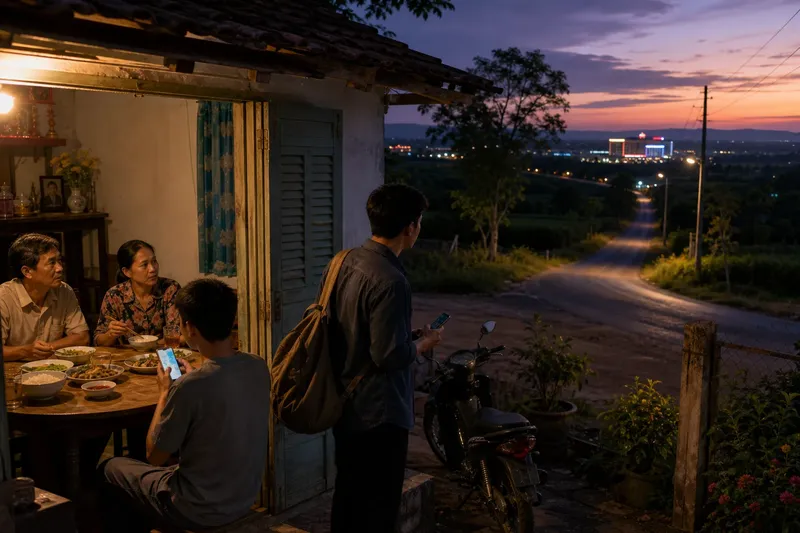
A character leaves a family meal in Trảng Bom after receiving an invitation to visit a casino. In casino stories in Trảng Bom, that departure can turn an ordinary evening into a question about how leisure is described and what the story chooses to leave in view.
Rural escape language
Words such as “getaway”, “open air” and “out of the way” can make a casino visit sound like a break from familiar routines. The phrasing sets a mood before the reader knows whether the character wants solitude, company or simply a change of scene.
Think of that language as a coat by the door: it signals departure, but says little about what happens outside. The story’s choices—what the character notices, delays or says—give the scene its detail.
Leisure beside duties
A casino visit may sit alongside work, family plans or a wish to spend time with friends. Those obligations do not vanish when a character steps away; they can shape the decision and the mood of the scene.
An unanswered message, a glance at the time or a promise to return can show leisure meeting responsibility. These details are more revealing than a broad label such as “escape”, because they make the character’s immediate choices legible.
Place in the scene
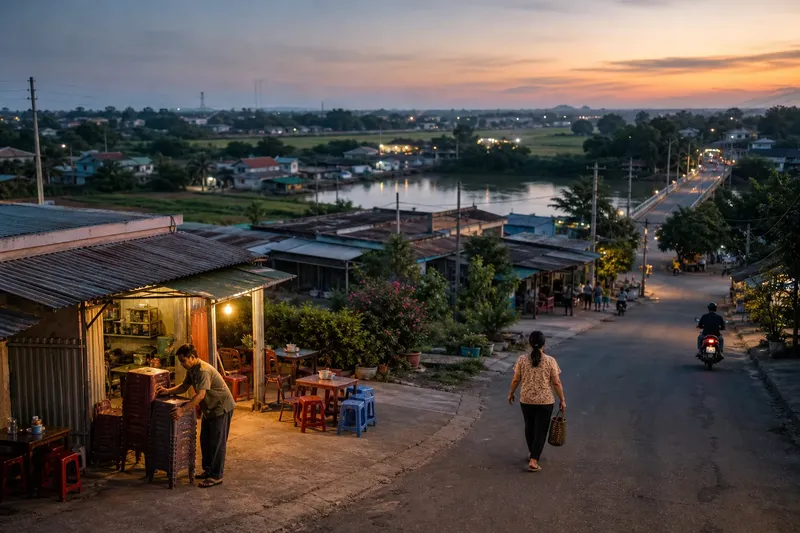
Trảng Bom can function as a location, a remembered home or a setting through which characters pass. Notice which details the story gives the place: a road, a meal, a workplace, a meeting point, or the words people use about their surroundings.
Those details shape the fictional scene without standing in for the whole district. A reader can ask what the setting allows this particular character to do, rather than treating rural life as a single, settled idea.
Character motives
Look at who initiates the visit and how the character explains accepting. A stated reason gives the reader a foothold; an unexplained decision leaves motive open and should not be filled in by assumption.
Also notice who is present but does not speak. A companion’s silence, a relative’s message or a worker’s brief exchange can reveal whose perspective the story centres and whose remains outside it.
Reading casino stories?
Does the setting make it a retreat?
Not on its own. The character’s stated motive and the scene’s contrasts indicate whether the story presents the visit as relief, novelty or an ordinary social plan.
How does work shape leisure?
A shift, fatigue or unfinished task can make the outing feel negotiated rather than separate from daily life. If work is absent from the scene, the story has not necessarily addressed that tension.
Whose viewpoint leads?
Notice who narrates and who gets to explain their choices. When local characters appear only through another person’s description, the scene offers a limited point of view.
What can fiction say about place?
Fiction can show how particular characters imagine and use a setting. Its scenes are crafted perspectives, not a complete account of local life.
A worked scene
Imagine a fictional character in Trảng Bom finishes a shift, has a family meal waiting at home and receives one invitation to visit a casino. The starting situation is specific: one finished shift, one waiting meal and one invitation. The character accepts, silences a sibling’s message and travels along a quiet road; the reader can observe the missed reply and the pause between work and the outing.
That sequence gives the scene a clear trade-off: the character gains an evening away from routine while leaving a family conversation unanswered. If the story later shows the character returning to the meal, the effect of the choice becomes part of the scene; if it ends at the casino visit, the family consequence remains unresolved.
Social details
- Motive: If the character names a reason for going, read it as the stated motive; if no reason appears, leave the motive open rather than supplying one.
- Time pressure: If a shift, appointment or meal shapes the scene, note how it limits the outing; if no obligation appears, do not claim the story has explored that tension.
- Relationships: If another person’s needs affect the decision, examine how the scene handles that conflict; if companions remain silent, recognise that the visitor’s perspective dominates.
- Local voices: If residents speak and make choices, consider how their viewpoints shape the scene; if they serve only as background, treat the portrayal as narrow and avoid drawing broader conclusions.
- Escape language: If the prose calls the visit a getaway, look for the routine it contrasts with; if no routine is shown, read “getaway” as an unelaborated mood.
- Ending: If the character returns to an earlier obligation, note what the story shows about that return; if the scene stops at the visit, treat its wider effects as unresolved.
Beyond the getaway
In casino stories in Trảng Bom, rural escape language can frame a choice between an appealing outing and ordinary commitments. To read that framing closely, follow the character’s motive, the details of place and the people who enter the scene as more than scenery.
A useful final question is what the story makes visible after the departure: the unanswered message, the return home, or nothing at all. That last detail helps distinguish a deliberately open ending from a scene that simply has not shown what comes next.